Key Points
-
Bayanzag (Flaming Cliffs) is the famous site where the world's first dinosaur egg fossils were discovered in 1923, widely known for its fiery red sunset cliff views.
-
Khongoryn Els is a massive sand dune reaching heights of up to 300 meters, famous as the "Singing Sands" due to the low humming sound produced by shifting sand grains.
-
Yolyn Am (Eagle Valley) is a high-altitude mountain gorge where thick ice remains late into the season despite being located in the middle of the desert.
-
Because these three major spots are separated by hundreds of kilometers, taking a 5 to 7-day model itinerary from Ulaanbaatar is the most practical way to explore them.
Full Article Content
Highlights of the Gobi Desert: Bayanzag Dinosaur Fossils & Sand Dunes
The essence of the Gobi Desert can be captured in three key locations: Bayanzag ("Flaming Cliffs") with its dinosaur fossils resting in red sandstone cliffs; Khongoryn Els, a giant sand dune rising nearly 300 meters high; and Yolyn Am, a cool mountain gorge where ice lingers even in a desert environment. Because these spots are separated by hundreds of kilometers, planning your route sequentially yields the best travel experience. This article covers the unique appeal, history, and practical 5–7 day model itineraries for exploring the Gobi efficiently.
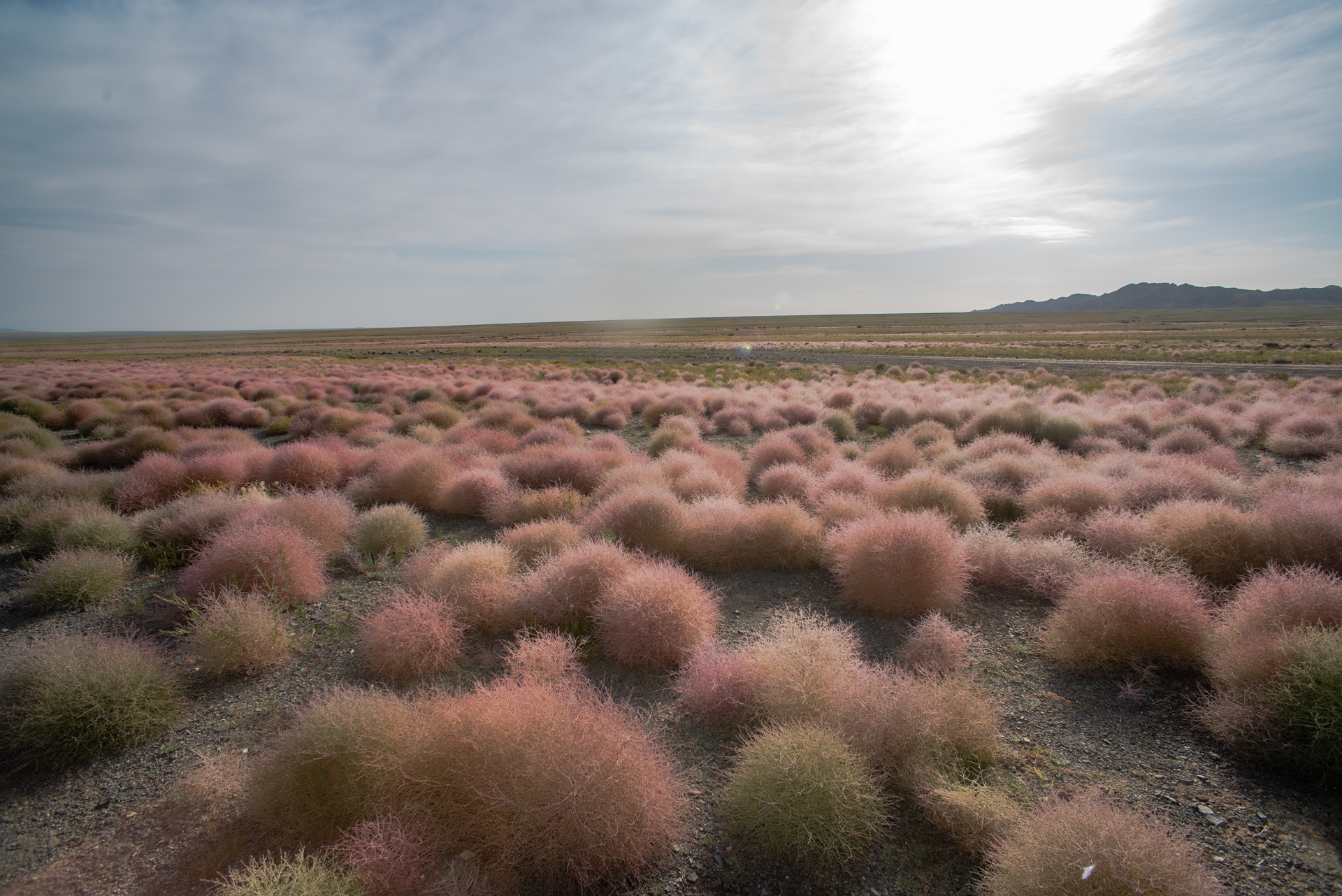
The Gobi Desert is a vast arid region stretching across southern Mongolia and northern China. While often imagined as an endless expanse of dry sand, its actual landscape is rich and diverse, featuring rocky mountains, steppes, green oases, and deep canyons. Exploring with an experienced local guide allows you to gain a deeper understanding of nomadic life and prehistoric fossil history.
Iconic Attractions of the Gobi Desert
When choosing highlights in the Gobi Desert, the top three places to start are Bayanzag, Khongoryn Els, and Yolyn Am. Representing "fossils," "dunes," and "ice canyons" respectively, each offers a completely different landscape within the same desert environment.
While these form the core of Gobi sightseeing, oasis villages, ancient petroglyph canyons, and nomadic ger camps are scattered along the way. Quite often, the quiet moments during overland transit leave the most lasting memories. The star-filled night sky is another major attraction; with zero light pollution, stargazing in the desert offers an unforgettable experience distinct from daytime views.
Bayanzag (Flaming Cliffs) and Dinosaur Fossil History
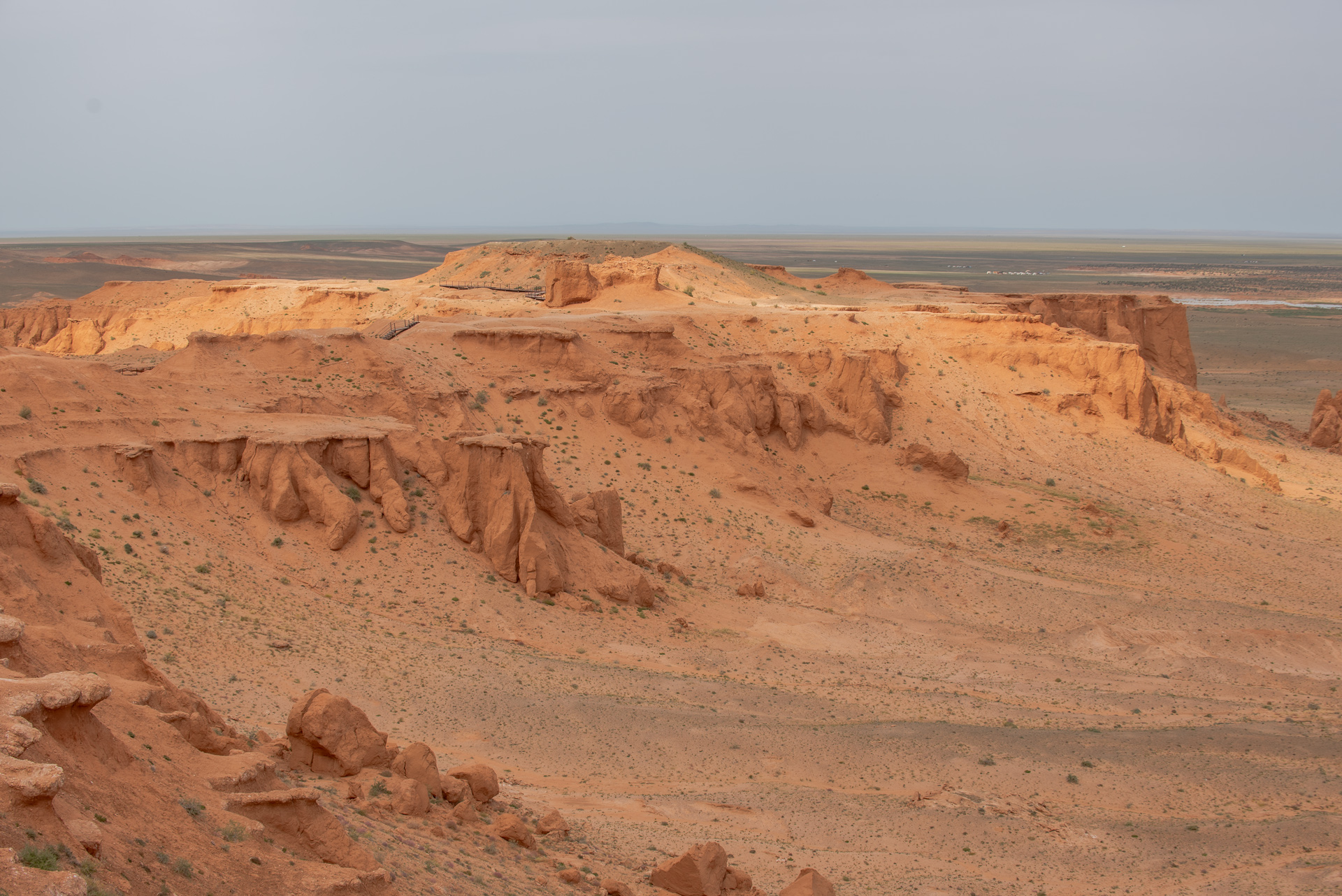
Bayanzag earned its nickname "Flaming Cliffs" because its red sandstone bluffs glow like fire during sunset. Beyond its striking scenery, this location holds a landmark place in the history of paleontology.
On July 13, 1923, an expedition led by explorer Roy Chapman Andrews of the American Museum of Natural History discovered the world's first scientifically documented dinosaur egg fossils here. Major fossil skeletons of Protoceratops and Oviraptor were discovered in succession, bringing Bayanzag international fame as a world-class fossil site.
To this day, fossil fragments occasionally surface on the ground. However, collecting or removing any fossils or rocks is strictly prohibited by Mongolian law, so visitors must strictly observe without disturbing the terrain. The red cliffs contrasting against sparse saxual groves at sunset create an iconic photograph for visitors.
Tips for Visitors:
-
Arrive late in the afternoon, as low-angled sunlight makes the red cliffs look most vibrant.
-
Bring a hat and plenty of water, as sunlight is intense with very little shade.
-
Respect local conservation rules: do not take fossils or stones from the site.
Experiencing the Great Khongoryn Els Sand Dunes
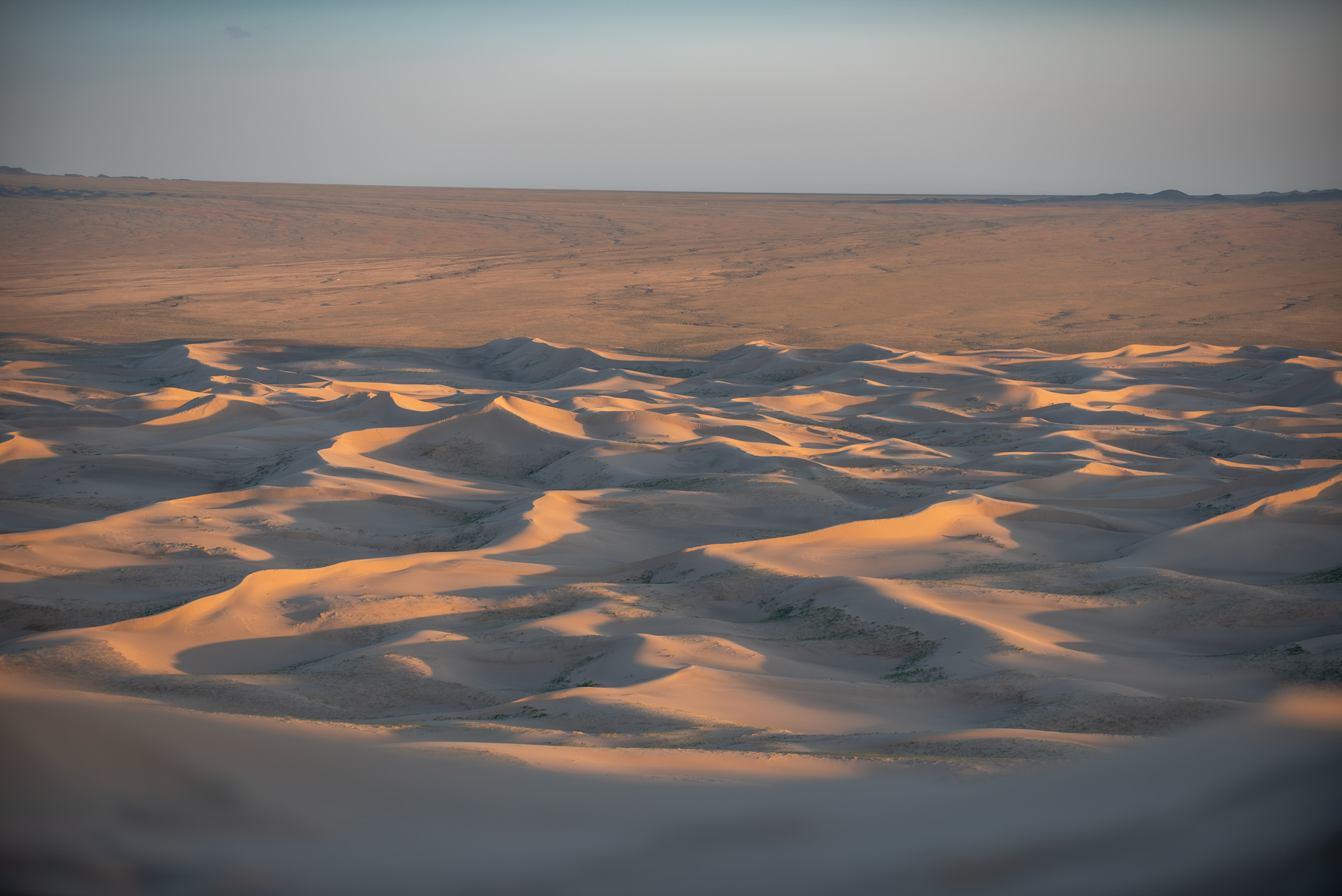
Khongoryn Els is the ultimate spot to experience the classic desert sea of sand. Reaching heights of up to 300 meters at its highest points, the dune system stretches continuously for approximately 100 to 180 kilometers.
These dunes are famously called the "Singing Sands" (or Singing Dunes). When wind blows or people slide down the slopes, friction between the sand grains creates a low, resonant humming sound. Climbing the steep slope to the crest takes 30 to 60 minutes, but standing on the ridge rewards climbers with a breathtaking contrast: endless waves of golden sand on one side and lush oasis greenery against mountain backdrops on the other.
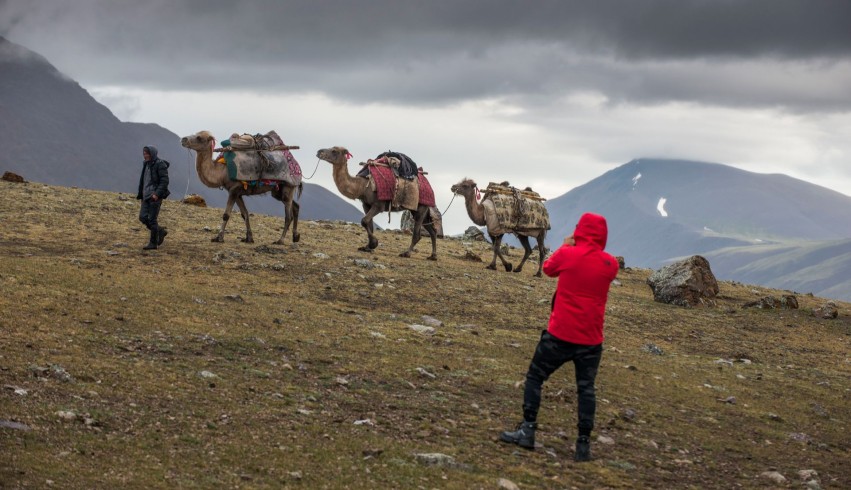
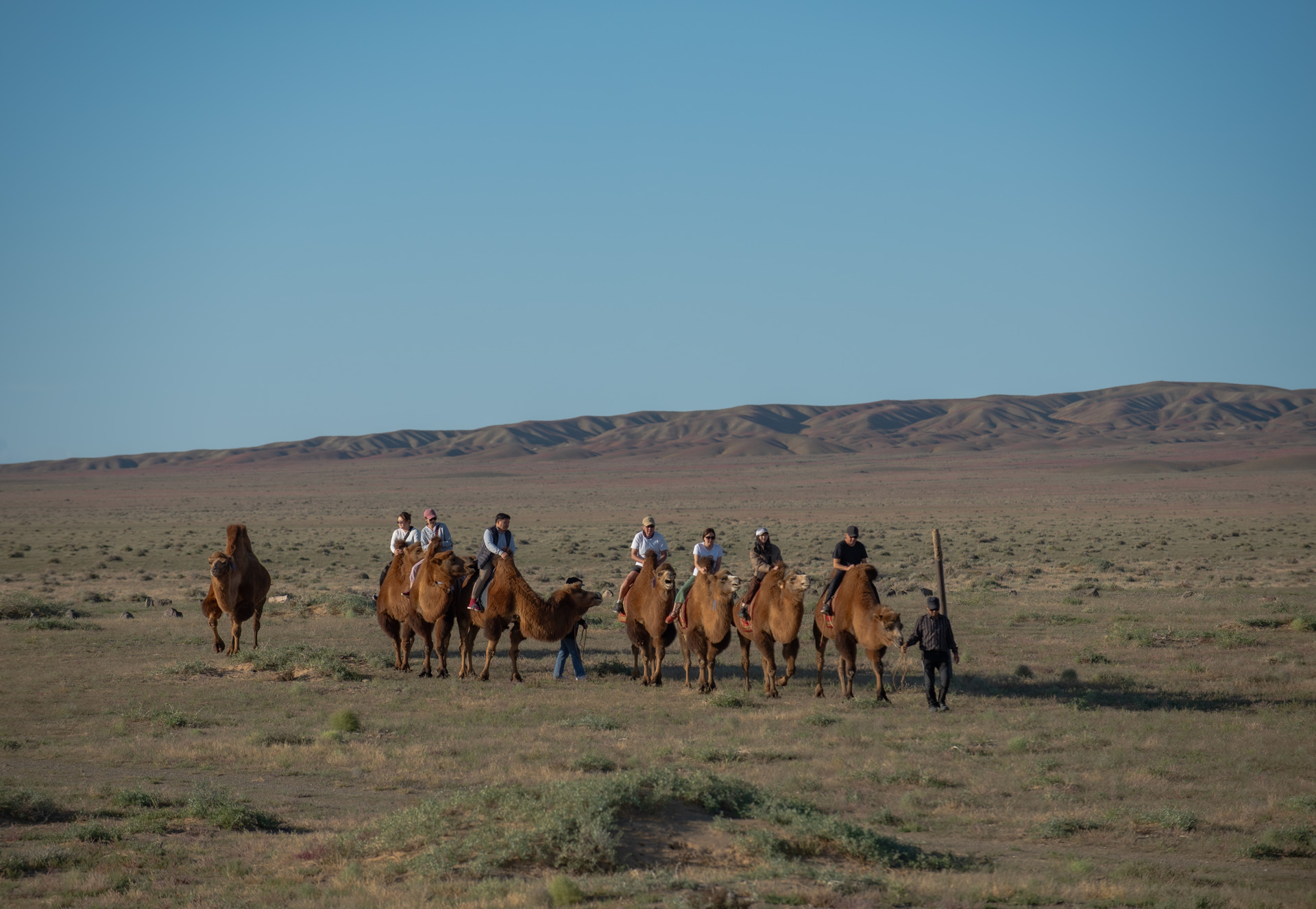
Camel riding at the base of the dunes is a classic highlight. Riding on the back of a Bactrian (two-humped) camel across the sand gives visitors a taste of traditional nomadic migration. Early morning and late afternoon offer the best lighting, showcasing dramatic shadows across the ripples of sand.
Yolyn Am (Ice Canyon) and Diverse Nature
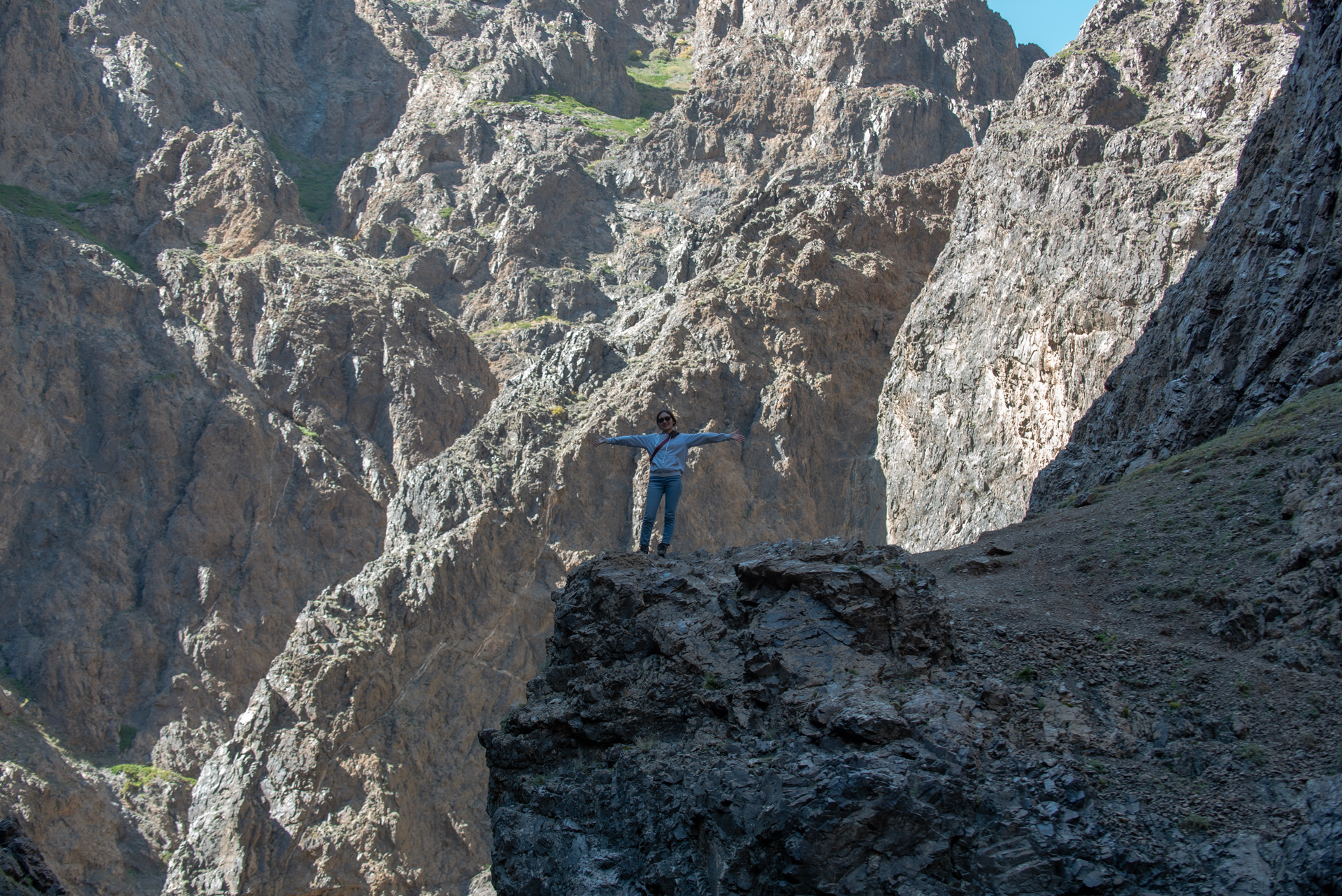
Yolyn Am (Eagle Valley) defies common perceptions of a desert. Tucked into a narrow canyon high in the Gurvan Saikhan Mountains, thick winter ice remains at the gorge floor well into early summer. Walking through the cool mountain breeze in the middle of a desert is a uniquely refreshing experience.
The valley derives its name from the Bearded Vulture (Yol in Mongolian) soaring overhead. Walking between sheer cliff walls, visitors frequently spot pikas and Siberian ibex. Because rising temperatures in recent years cause the ice to melt earlier in summer, visiting in May or June offers the best chance to see the ice sheets intact.
Beyond these sites, the Gobi features local dinosaur museums, rock art canyons, and authentic ger camps, showcasing the true depth of southern Mongolia beyond simple sand dunes.
Model Itinerary: Exploring Highlights Efficiently
Because the main highlights are separated by hundreds of kilometers, tailoring your itinerary to your stay duration is essential. Starting from Ulaanbaatar, 5 to 7 days provides a comfortable timeframe to visit all main attractions.
5 to 7-Day Basic Itinerary:
-
Day 1: Travel from Ulaanbaatar to the Gobi by domestic flight or 4x4 overland vehicle. Visit nearby local canyons or museums upon arrival.
-
Days 2–3: Explore Yolyn Am canyon to observe wildlife and the mountain gorge.
-
Days 4–5: Transfer to Khongoryn Els for dune climbing, camel riding, and sunrise/sunset photography.
-
Day 6: Travel to Bayanzag. Arrive before sunset to enjoy the evening view of the Flaming Cliffs.
-
Day 7: Return to Ulaanbaatar to conclude the expedition.
Due to long driving distances and unpaved terrain, hiring a 4x4 vehicle with an experienced driver and guide ensures a safe and comfortable trip. Mongolia Travel offers customizable Gobi Desert tours tailored to your pace, blending fossil history, landscape highlights, and authentic visits to nomadic families.
Frequently Asked Questions (FAQ)
How many days are needed to tour the highlights of the Gobi Desert?
To visit Bayanzag, Khongoryn Els, and Yolyn Am comfortably, a 5 to 7-day round trip from Ulaanbaatar is recommended. Combining domestic flights with a chartered 4x4 vehicle minimizes travel time.
When is the best season to visit the Gobi Desert?
June through September offers the most pleasant weather for dune climbing and camel trekking. Temperatures drop significantly at night, so warm layers are necessary even in summer.
Can visitors still see dinosaur fossils at Bayanzag?
While small fossil fragments occasionally surface on the ground, taking or collecting them is strictly illegal. Enjoy viewing them on site and strictly adhere to local preservation rules.
Is it possible to climb the Khongoryn Els sand dunes?
Yes, visitors can climb the dunes. The steep ascent takes 30 to 60 minutes, but the panoramic views from the ridge and the sound of the singing sands make the climb well worth the effort. Early morning or late afternoon is recommended.