Key Points
-
Tsengel Village is located in Bayan-Ölgii Province in western Mongolia and serves as the primary gateway settlement for trekking in the Altai Mountains and Altai Tavan Bogd National Park.
-
Khuiten Peak, Mongolia's highest mountain at an elevation of 4,374 meters, has its climbing routes passing through the surrounding Tsengel area.
-
While Bayan-Ölgii Province is predominantly inhabited by Kazakh people, Tsengel is a rare region centered around a Tuvan ethnic population.
-
The best season for trekking is generally from June to September, and professional guide accompaniment is essential for full-scale mountain climbs involving glacier walking.
Tsengel Village is a small settlement located in Bayan-Ölgii Province in western Mongolia, serving as a strategic base for trekking in the Altai Mountains and exploring Altai Tavan Bogd National Park. Summing up the relationship between Tsengel and the Altai Mountains in one sentence: it is the last established village travelers pass through before leaving civilization behind to head toward Khuiten Peak, Mongolia's highest summit.
This article introduces the location and role of Tsengel Village, its function as a mountaineering base, the nomadic cultures living in the area, the natural experiences available, and key access and stay points. It summarizes essential knowledge for travelers planning a serious expedition into Mongolia's remote wilderness.
Location and Role of Tsengel Village, Bayan-Ölgii Province
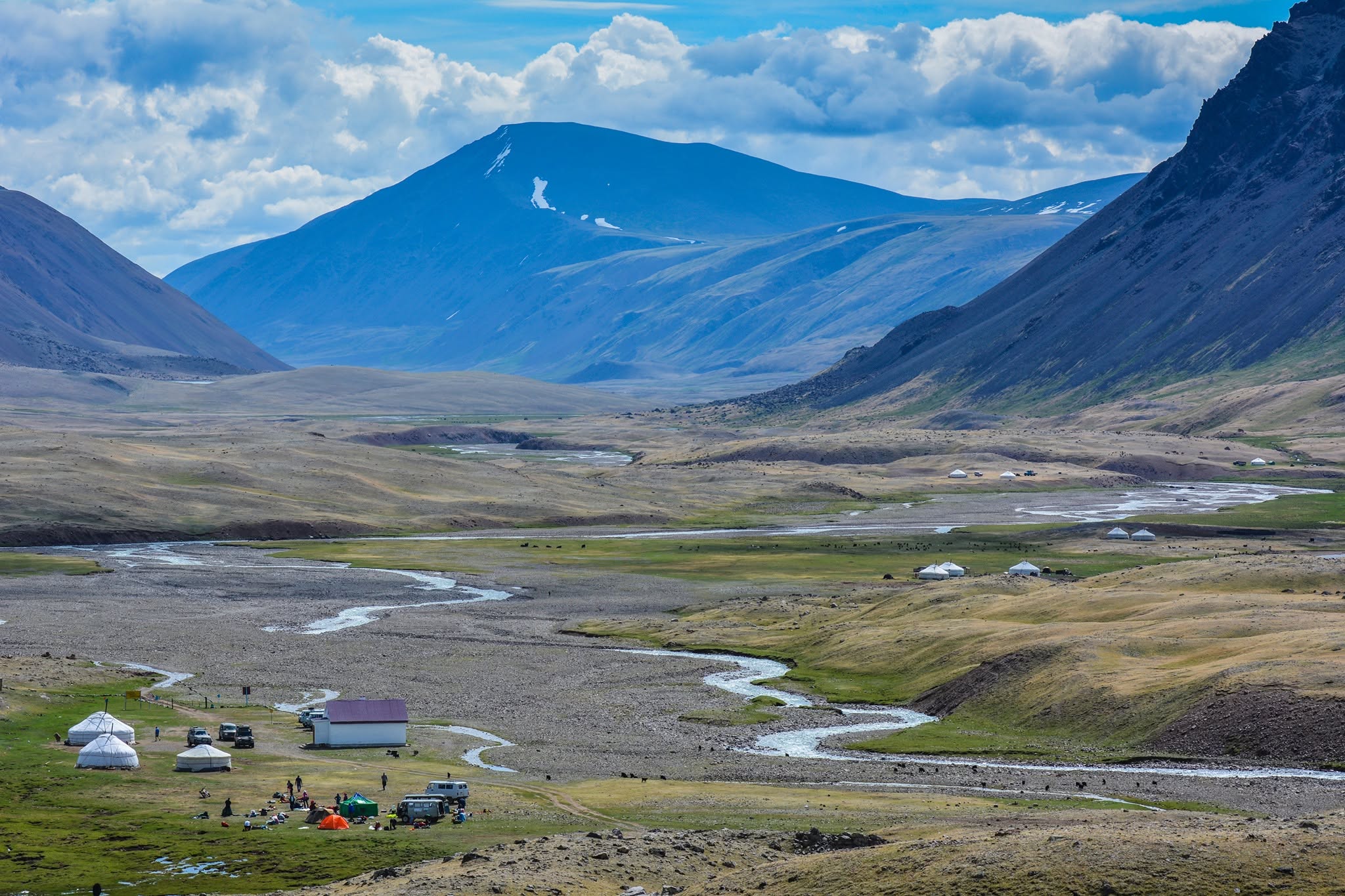
Tsengel Village lies in the mountainous region of Bayan-Ölgii Province, situated at the westernmost edge of Mongolia. Bordering China and Russia, this area is far removed from the capital city of Ulaanbaatar and stands as one of the most remote regions in the country. Located deeper in the mountains past Ölgii, the provincial capital, it serves as a frontline settlement right before the full-scale alpine region begins.
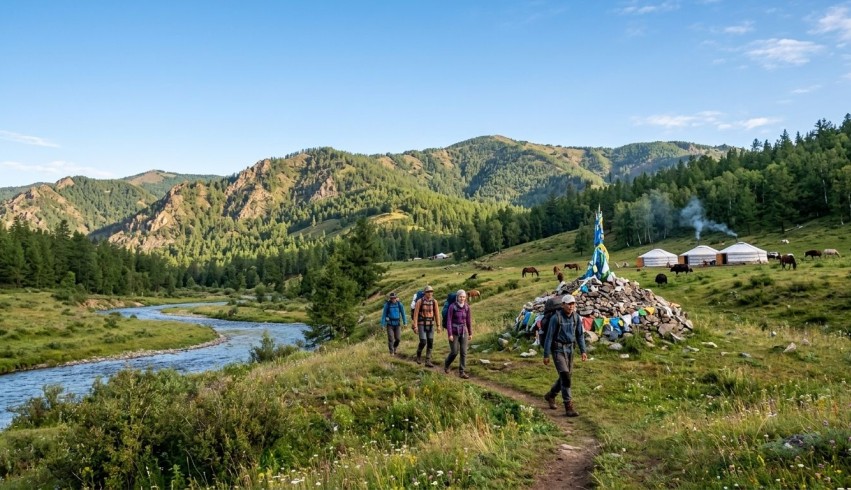
In terms of role, it functions as a critical transit hub for resupplying gear, accommodation, and arranging mountain climbing and trekking permits. Inside the national park beyond this point, there are virtually no shops or lodges. Therefore, travelers secure food and fuel in Tsengel or Ölgii and head into the mountains using nomadic gers or simple guesthouses. Describing it as a "gateway" is fitting because the scenery shifts dramatically from human-inhabited grasslands to a world of alpine glaciers right at the village boundary.
Starting Hub for Altai Mountains Trekking
The area surrounding Tsengel serves as the practical starting hub for those aiming for Altai Tavan Bogd National Park and Khuiten Peak, Mongolia's highest summit. Tavan Bogd translates to "Five Sacred Peaks" in Mongolian, with its highest point, Khuiten Peak, reaching an elevation of 4,374 meters. Reaching the summit requires full-scale glacier mountaineering, including sections where ice axes and crampons are essential.
Designated in 1996, the national park spans approximately 636,161 hectares (6,362 square kilometers). Within the park lie numerous glaciers, among which the Potanin Glacier is known as the longest in Mongolia. Cascading down the eastern face of Khuiten Peak, this glacier forms the core part of the climbing route.
The recommended season for trekking is generally from June to September. Even in summer, snow remains at high altitudes, making experience and proper gear indispensable for crossing glaciers. For those trekking the Altai for the first time, hiring a local guide who knows the routes and weather conditions thoroughly provides safety and peace of mind. For a more detailed summit plan, consulting our "Complete Guide to Mongolia Mountain Climbing Tours" will help you get the full picture.
Lifestyle and Culture of Kazakh and Tuvan Nomads
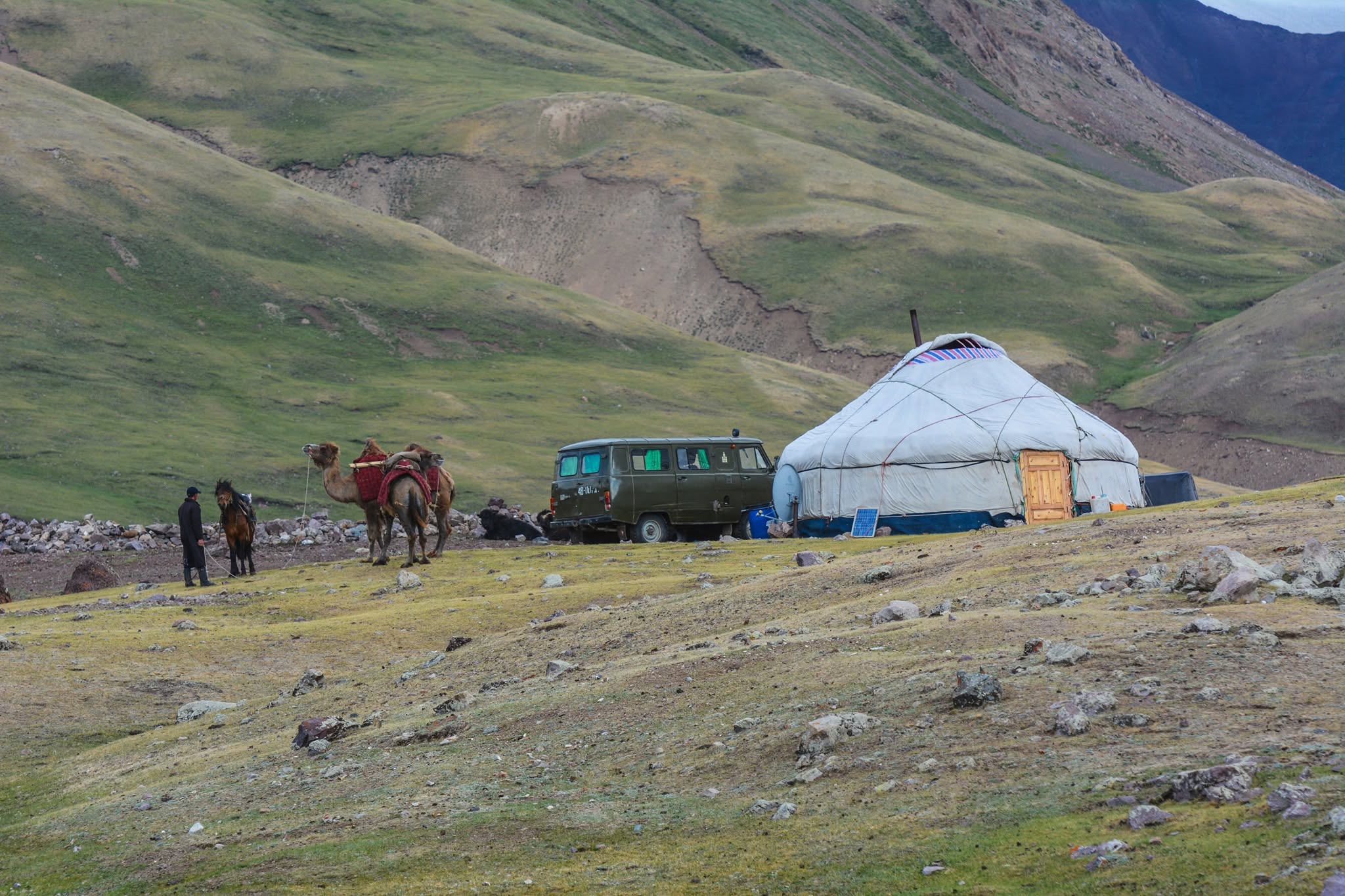
One of Tsengel's greatest attractions is its unique ethnic composition. Bayan-Ölgii Province is well known as Mongolia's only predominantly Kazakh and Muslim-majority province. However, Tsengel is an exception—it is a region home to a large Tuvan population. They speak the Tuvan language and preserve their distinct throat singing, traditional songs, and spiritual beliefs to this day.
At the same time, the Kazakh culture that characterizes the broader province can also be experienced firsthand when traveling through Tsengel. Particularly famous is traditional eagle hunting using golden eagles. Horseback eagle hunters have a long history of winter hunting, passing down these skills through generations.
When travelers are welcomed into a ger, receiving horse milk (airag) and local dairy products is traditional nomadic etiquette. Even if you don't speak the language, accepting a bowl with both hands conveys respect instantly. Experiencing this living culture offers a memorable and distinct time unique to Tsengel.
Nature and Experiences Around the Village
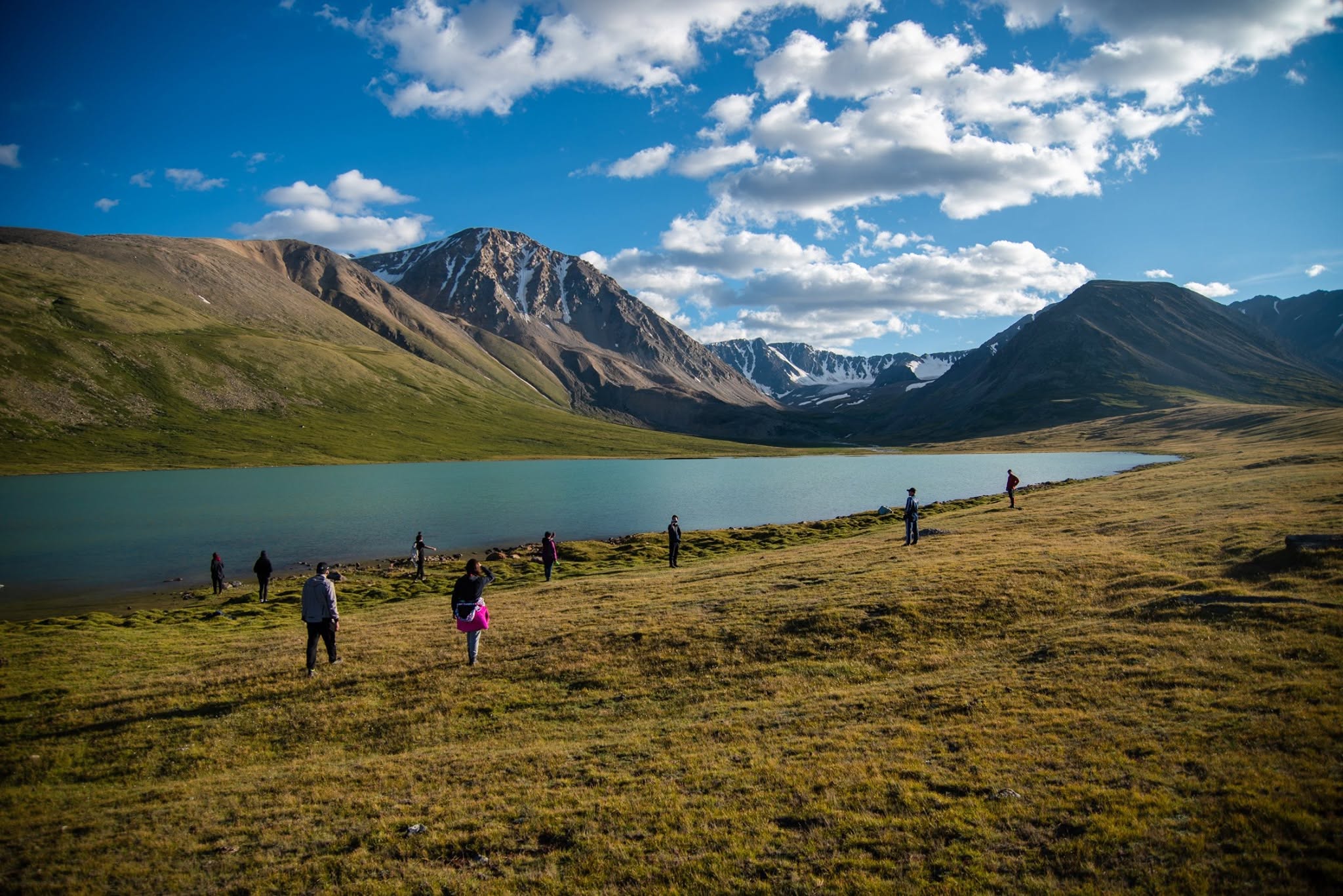
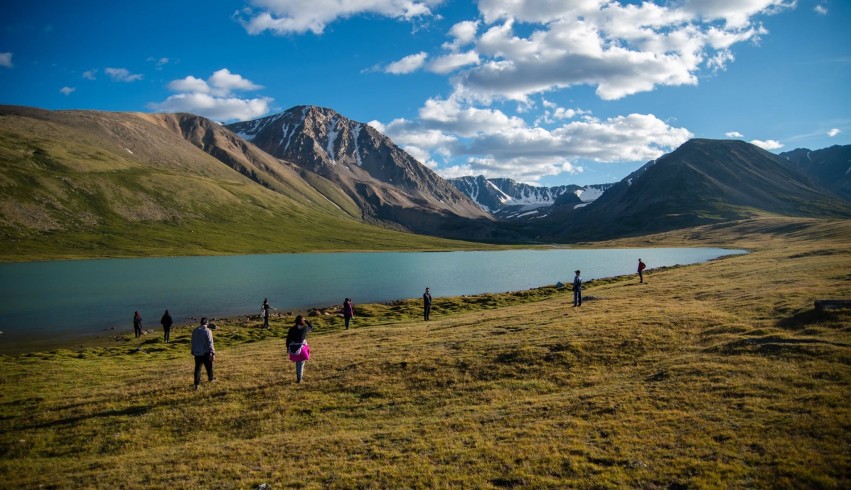
The area surrounding Tsengel offers plenty of highlights even for travelers whose primary goal is not reaching the peak. Within Altai Tavan Bogd National Park lie three freshwater lakes: Khoton Lake, Khurgan Lake, and Dayan Lake, fed by melting glaciers that serve as the headwaters for surrounding rivers. The area is home to rich wildlife, including argali (wild sheep), ibex, snow leopards, and golden eagles—offering a chance to encounter high-altitude wildlife if you are lucky.
Its value as a cultural heritage site is also not to be missed. The Petroglyphic Complexes of the Mongolian Altai are registered as a UNESCO World Heritage site, preserving records of human life etched into rock faces since ancient times. A land where you can experience glacial trekking, ancient rock art, and nomadic lifestyles all at once is rare, even in Mongolia.
There are various ways to enjoy the region. You can spend a relaxing time by the lakeshores or ride horses across the vast grasslands. The night sky is particularly exceptional; in a land untouched by artificial light, the Milky Way emerges with striking clarity.
Access Methods and Stay Tips
To reach Tsengel, taking a domestic flight from Ulaanbaatar to Ölgii, the provincial capital, is the most practical option. Using a flight saves a significant amount of time compared to long-distance overland travel. From Ölgii to Tsengel, you will travel over unpaved mountain roads in a 4WD vehicle. The route involves river crossings and mountain passes, where heavy rain can cause delays, so building flexibility into your schedule ensures peace of mind.
Accommodation primarily consists of simple village lodges, guest gers, or camping stays with nomadic families. Electricity and telecommunications are limited, and places accepting cash or cards are scarce, so make sure to secure all necessary supplies in Ölgii beforehand. Due to the high altitude, mornings and evenings get cold even in summer, making warm layers an absolute necessity.
Considering language barriers and logistics, booking through a local travel agency familiar with the region is a solid choice. Mongolia Travel specializes in arranging Altai mountain climbing and trekking tours accompanied by Japanese-speaking guides, seamlessly managing transportation, accommodations, and climbing permits together.
As a next step, we recommend deciding on your preferred travel period and tentatively reserving dates within the prime season from June to September. The earlier you secure flights and guides, the more options you will have. A journey deep into the Altai starting from Tsengel is one where precise planning directly enhances the quality of your experience.
Frequently Asked Questions (FAQ)
Q: Where is Tsengel Village located?
A: It is a settlement located in Bayan-Ölgii Province in western Mongolia, serving as the gateway hub for the Altai Mountains and Altai Tavan Bogd National Park. It lies in a mountainous region close to the borders of China and Russia.
Q: Can I climb the Altai Mountains starting from Tsengel?
A: While the village itself is not the trailhead, passing through the Tsengel area is the standard route to enter Altai Tavan Bogd National Park and head toward Khuiten Peak.
Q: When is the best season to visit Tsengel?
A: The recommended season is generally from June to September. During this period, mountain passes and high-altitude trekking are most accessible, and you are more likely to encounter local cultural events.
Q: What people live in Tsengel?
A: While the surrounding Bayan-Ölgii Province is predominantly Kazakh, Tsengel is well known as a region inhabited by a significant Tuvan nomadic population.