-
Mongolian cuisine and food culture are centered around two main pillars: dairy products and meat derived from livestock. As of the end of 2025, the country's livestock population reached 58.1 million heads.
-
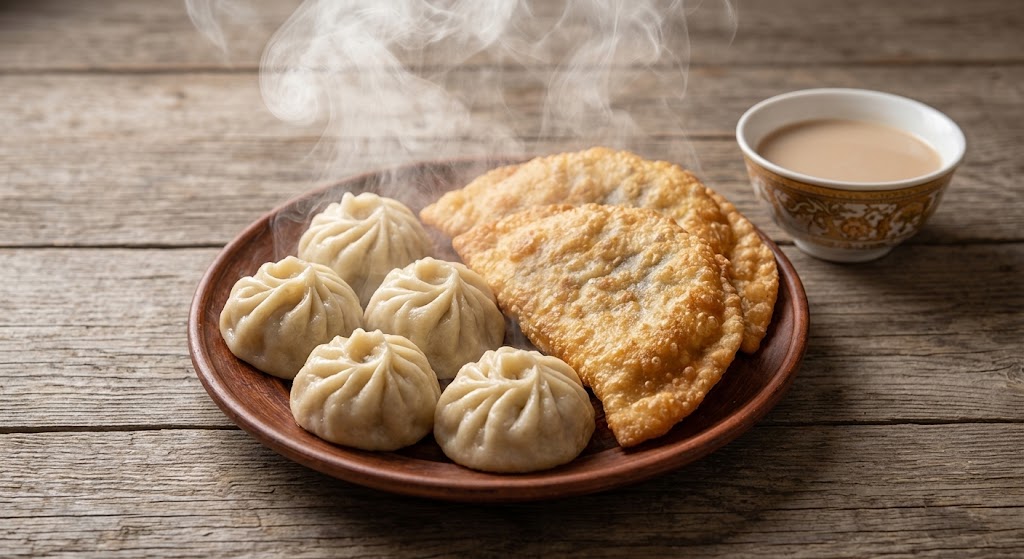
Buuz (steamed dumplings) and Khuushuur (fried meat pastries) are staple dishes you can encounter at almost any local eatery.
-
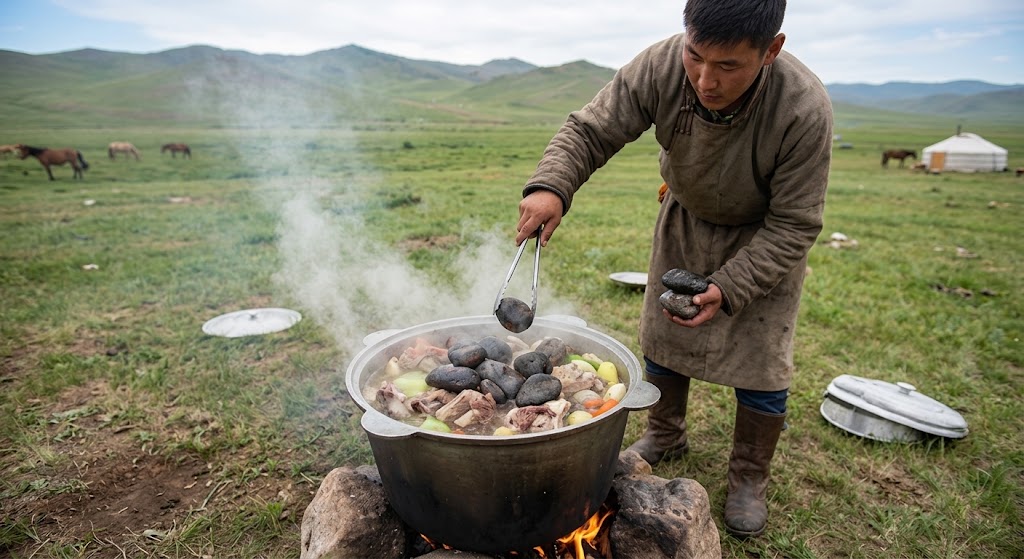
Khorkhog and Boodog are quintessential nomadic cooking methods that use heated stones to steam-cook meat.
-
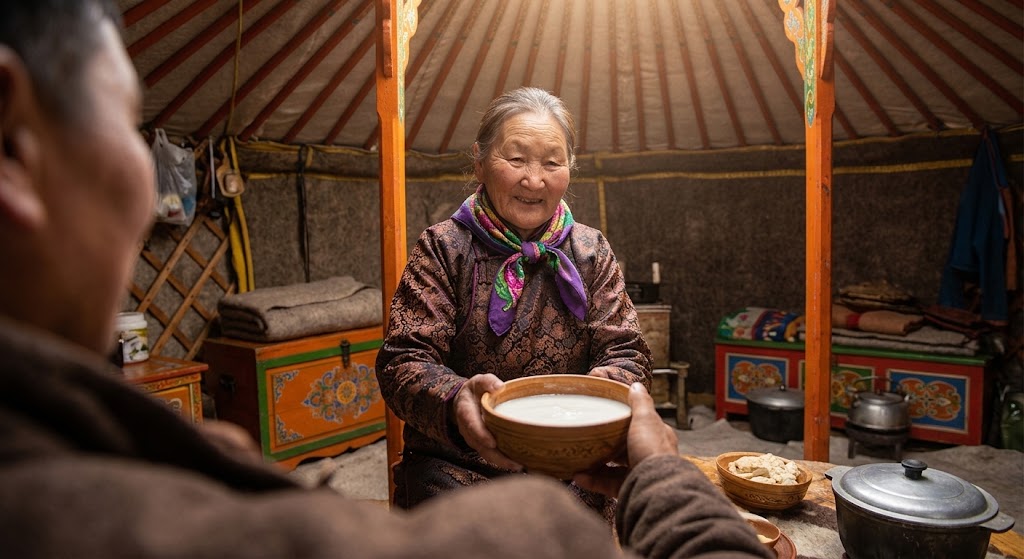
Airag (fermented mare's milk) is a low-alcohol beverage that can be enjoyed during the summer at nomadic camps.
Mongolian cuisine and food culture were born from the nomadic way of life on the vast steppes. Built around dairy products and meat obtained from livestock, every dish is packed with wisdom for surviving the harsh winters. This article introduces traditional flavors you should experience during your trip—from the dairy-centric food philosophy and staple dishes like buuz and khuushuur, to hearty stone-cooked meat dishes and fermented mare's milk.
For nomads, meals follow the rhythm of the seasons and livestock. Summer brings an abundance of dairy products, while stored meat becomes the center of the dining table in winter. Understanding this seasonal cycle will make every meal during your stay much more meaningful.
Nomadic Food Culture Centered Around Dairy Products
The starting point for understanding Mongolian cuisine lies in its dairy products. Nomads raise five main types of livestock—sheep, goats, cattle, horses, and camels—utilizing their milk without waste. By the end of 2025, Mongolia's livestock population reached 58.1 million heads (Xinhua, 2025). The scale of this livestock directly supports the richness of the food culture.
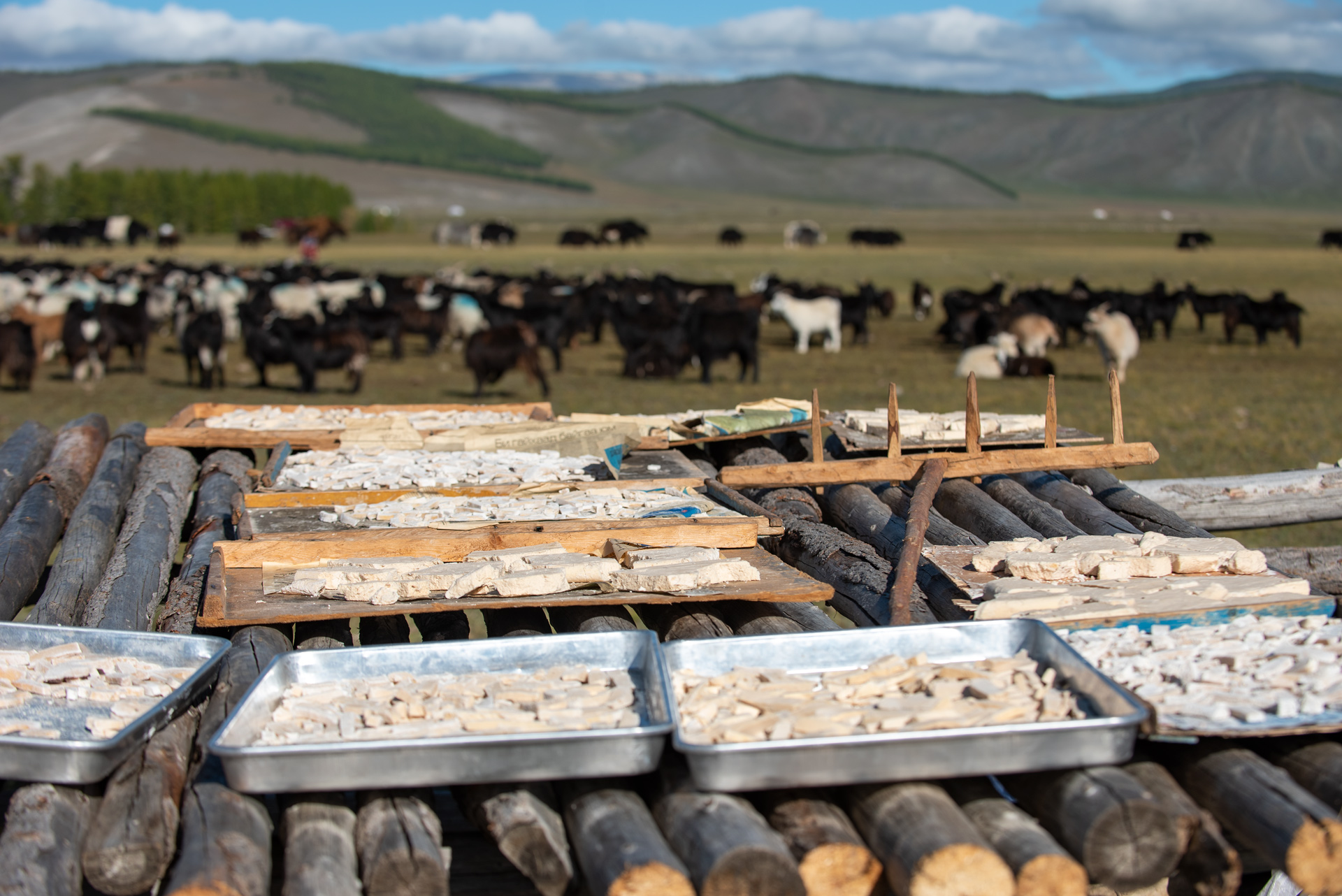
On the summer steppes, various processed goods are created from freshly milked milk. Known collectively as "Tsagaan Edee" (white foods), dairy products come in a wide variety, including Aaruul (dried curd cheese), Urum (clotted cream), and Tarag (yogurt/fermented milk). Because they store well, they serve as precious sources of nutrition during the milk-scarce winter months.
According to the same Xinhua report, approximately 40% of Mongolia's nomadic population earns their living through animal husbandry. It can be said that food and daily life are inextricably linked in this country.
If you travel across the steppes, visiting a ger to taste traditional dairy products is a classic experience. These "white foods" made from freshly milked dairy lie at the very core of nomadic hospitality.
Staple Dishes: Buuz and Khuushuur
Among the dishes travelers encounter first, Buuz and Khuushuur are the most common. Both consist of minced meat wrapped in wheat flour dough and are widely enjoyed both in local restaurants and at home. While they look somewhat similar, their cooking methods and dining contexts differ.
Buuz are steamed dumplings. Minced mutton or beef is mixed with a small amount of onion and garlic, wrapped in flour dough, and steamed to perfection. During Tsagaan Sar (Lunar New Year), it is customary to stack them high and serve them to guests, making them indispensable for festive occasions.
Khuushuur, on the other hand, uses the same filling wrapped in a thin, flattened dough that is deep-fried in oil. The exterior is crispy while juicy meat flavors fill the inside. It is a signature food at the Naadam Festival stalls and a popular treat to enjoy on the go while traveling. Since both can be eaten easily by hand, they are perfectly suited for a nomadic lifestyle on the move.
Traditional Cooking Methods Using Livestock Meat
The most distinctive feature of Mongolian meat dishes is the cooking method that uses heated stones. Khorkhog and Boodog are well known as hearty steam-roasted dishes born from the nomadic way of life. They are special culinary creations served during celebrations and hospitality feasts.
Khorkhog is prepared by placing mutton, vegetables, and fire-heated stones layer by layer inside a metal canister, which is then sealed airtight to steam-cook the ingredients. The far-infrared heat from the stones cooks the meat thoroughly from the inside, giving it a unique tenderness. It is traditional lore that holding the hot stones after finishing the meal promotes health and well-being.
Boodog is a technique where the meat and hot stones are stuffed back inside the skin of a goat or sheep, and then roasted over an open fire from the outside. Because the meat is steam-cooked directly inside the animal's hide after removing the internal organs, it requires significant labor; nevertheless, it has been passed down as a feast for truly special occasions. Mongolian winters are extremely cold, making fatty mutton an invaluable source of energy.
These labor-intensive cooking techniques have been handed down through generations of nomadic life alongside livestock as centerpiece meals for special days. In a land with such harsh cold, meat rich in fat serves as a thoroughly practical and logical staple.
Traditional Beverages Like Airag (Fermented Mare's Milk)
The quintessential summer drink in Mongolia is Airag (fermented mare's milk). Made by fermenting horse milk in leather bags, it is characterized by a mild acidity and a slight effervescence. Its alcohol content is lower than that of beer, and it is enjoyed daily by people of all ages, from children to adults.
Airag is a seasonal beverage produced only during the summer months when mares lactate. Its flavor changes as fermentation progresses: it is mellow in early summer and grows stronger in acidity and tanginess toward early autumn. When you visit a nomadic ger, it is served in a bowl as a token of welcome to guests.
Another daily essential is Süutei Tsai (milk tea). It is a salted milk tea made by adding milk and salt to boiled tea leaves, and it is consumed multiple times a day. The culture of fermented milk and milk tea is a tradition condensed with the culinary and nomadic wisdom of Mongolia. The background regarding the nutrition and production methods of fermented milk can also be explored in the Encyclopedia Britannica's entry on Mongolian culture.
Recommended Dishes to Try During Your Trip
If you travel to Mongolia, experiencing both standard staples and seasonal delicacies is a must. While Buuz and Khuushuur can be enjoyed year-round at local eateries in Ulaanbaatar, dishes like Airag and Khorkhog are best experienced in their authentic form at countryside nomadic camps.
When planning your itinerary, keep your visiting period in mind. The summer steppes offer an abundance of dairy products and Airag, whereas meat-based dishes become the centerpiece in winter. For more details on seasonal highlights, check our guide on "When is the Best Time to Visit Mongolia? Monthly Guide".
To experience the local food culture with peace of mind, booking through a travel provider familiar with regional nuances makes a reliable companion. Mongolia Travel offers cultural experiences—such as tasting Airag and Khorkhog inside a nomadic ger—accompanied by Japanese-speaking guides. The main advantage is enjoying traditional flavors while connecting with nomadic life without worrying about language barriers. A meal on the vast steppes is bound to become an unforgettable memory of your Mongolian journey. Start by deciding on your preferred season and area, and begin adding the dishes you want to try into your travel plan.